
Paio Shell Money
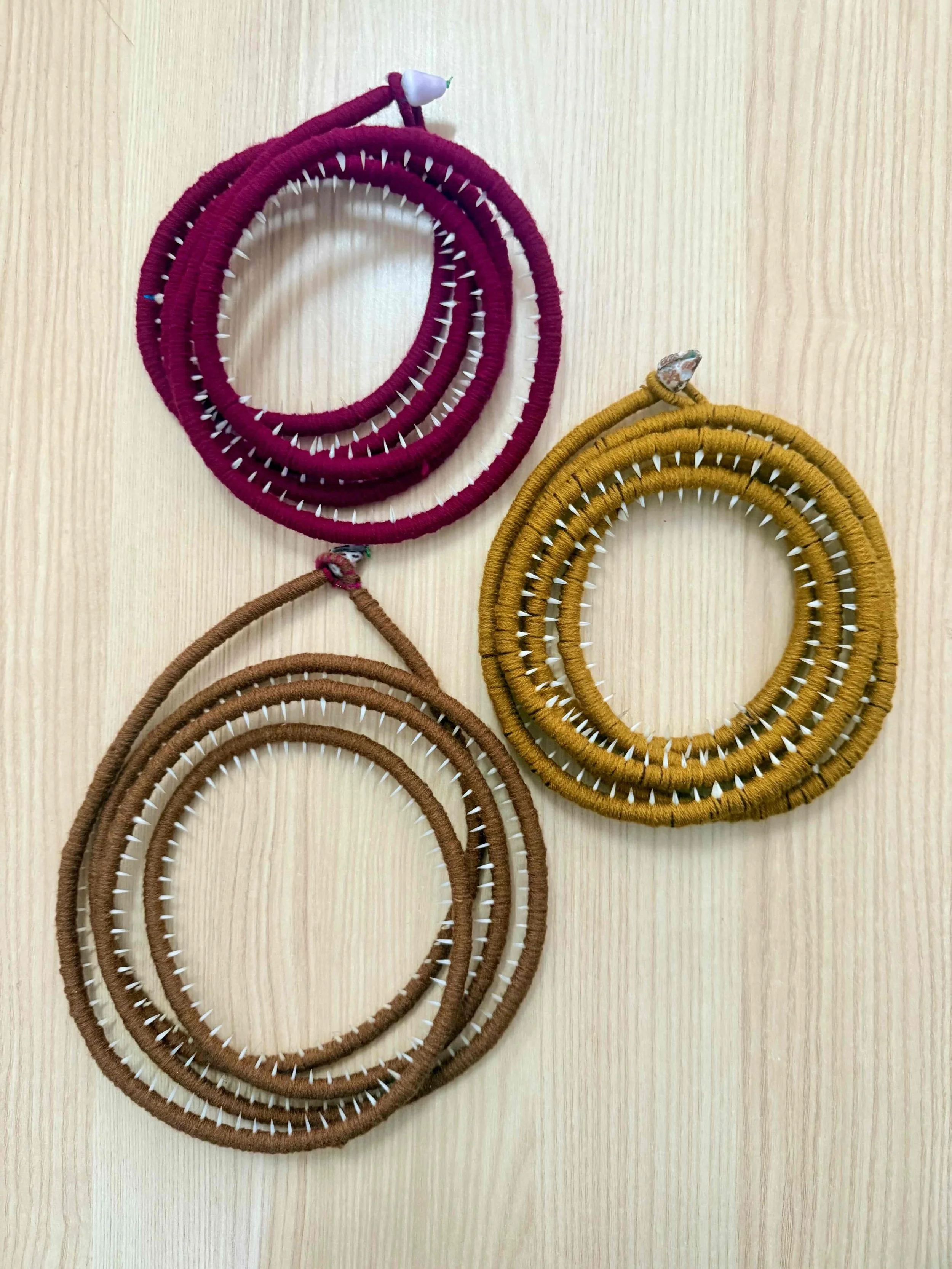
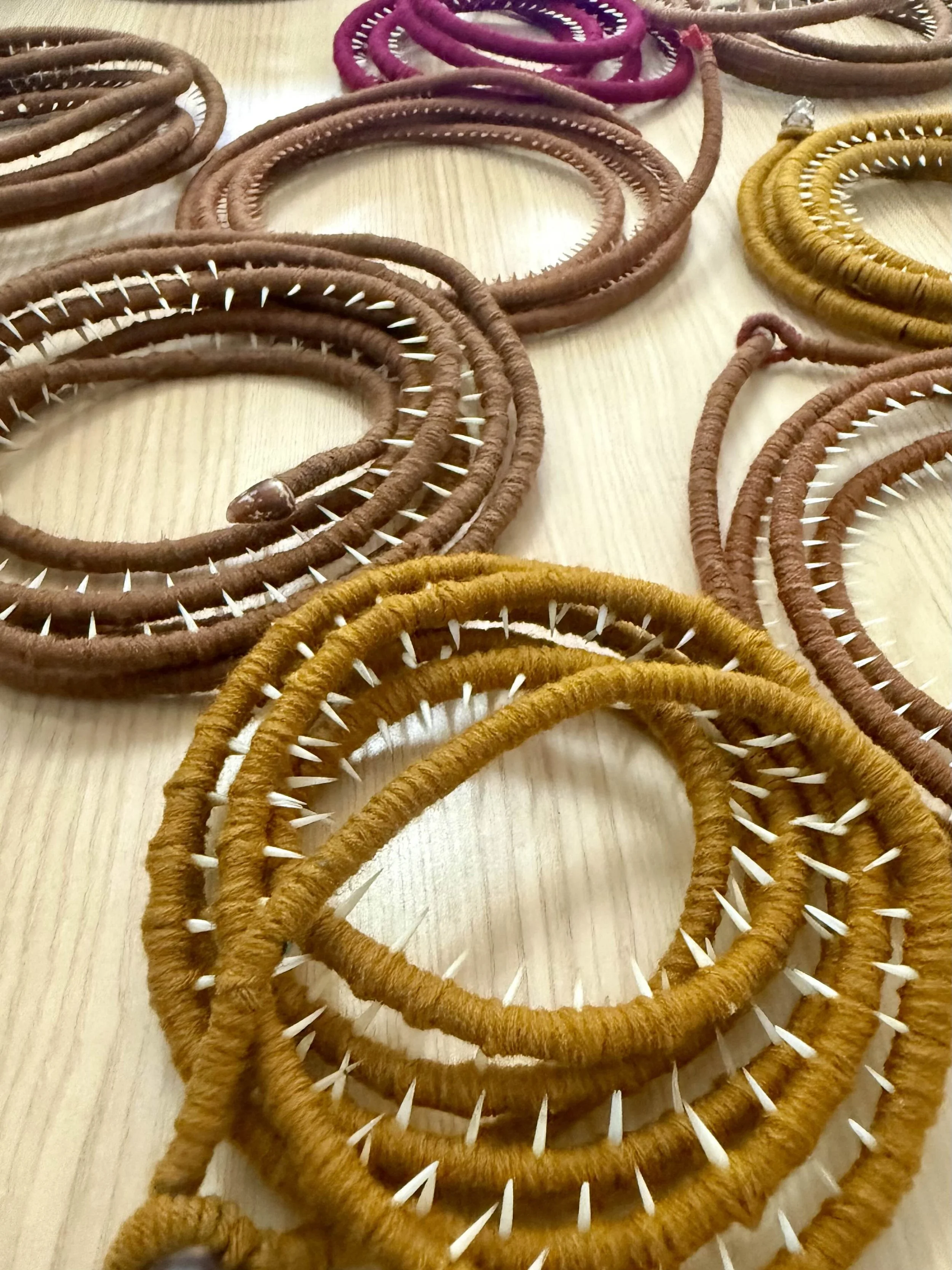
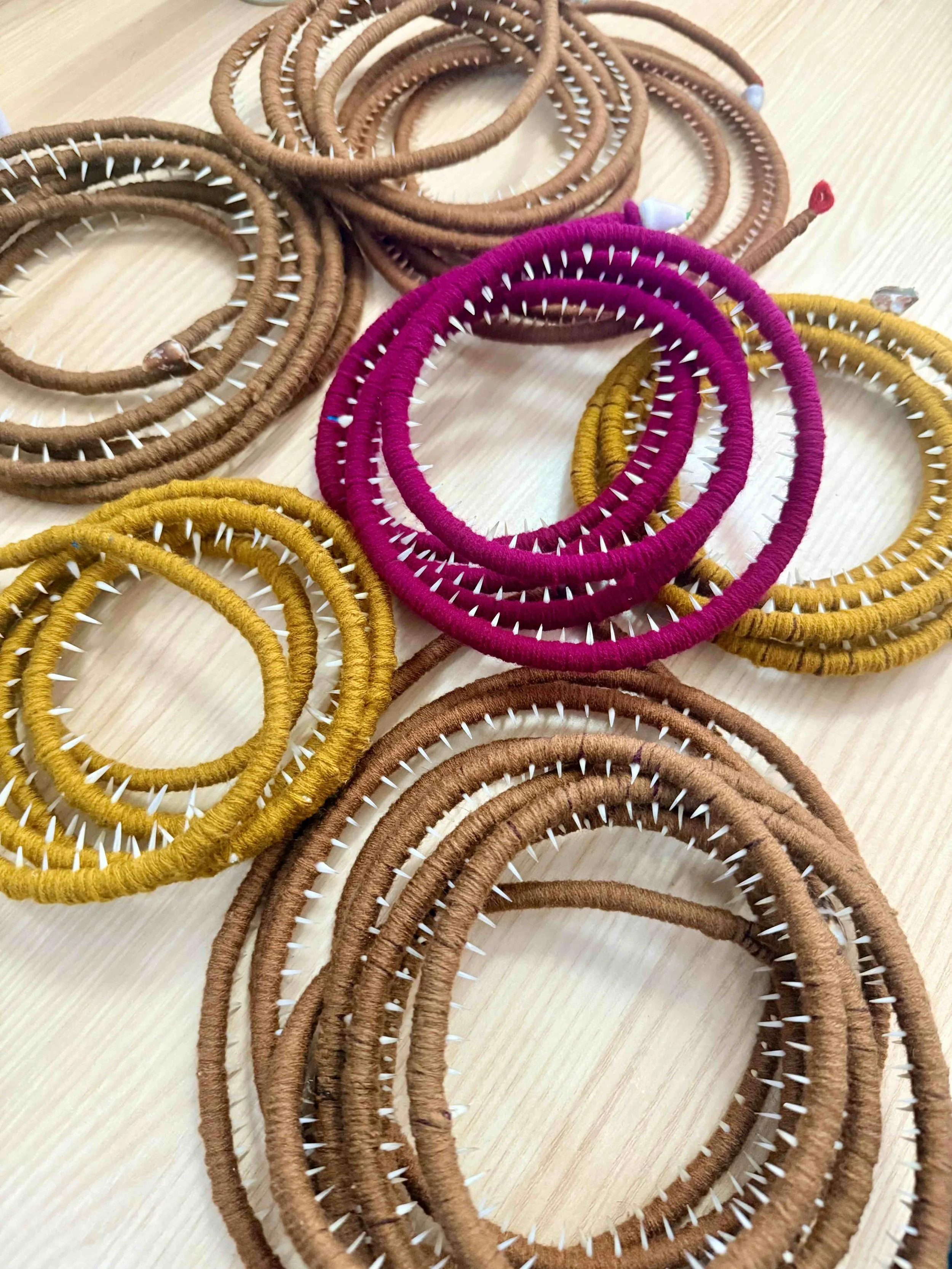
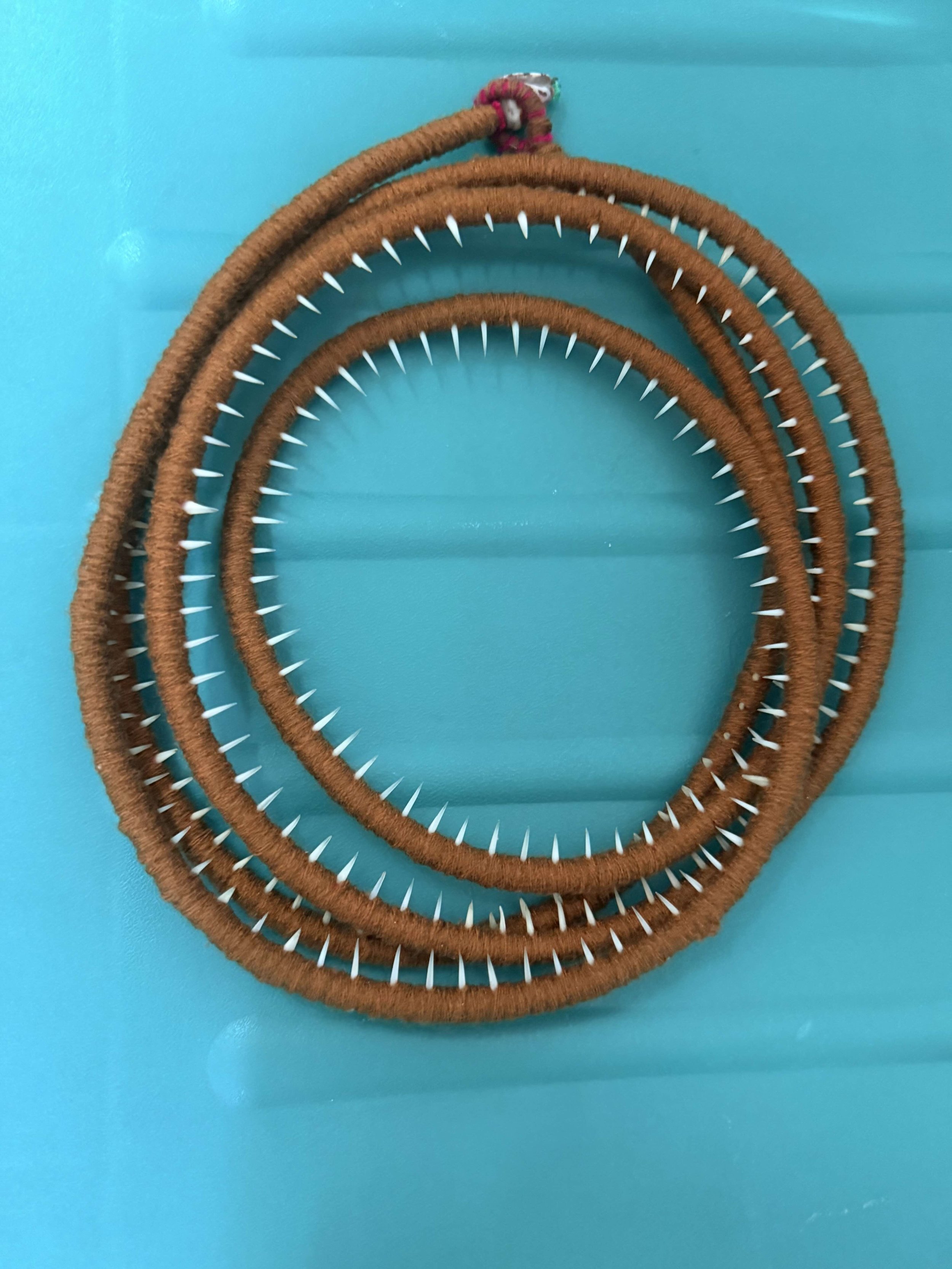
The traditional practice of making and using shell money remains strong in North Bougainville particularly among the people of Selau-Suir, Halia and Tonsu. In the Halia language, traditional shell money is known as Paio. They are not worn, but are hung on the walls as interior decoration.
Materials Used
Traditionally, Paio is crafted using animal teeth woven together using fibers made from tree bark, which are braided or twisted to form the rope structure holding the teeth. The teeth used include Cuscus teeth, Flying fox teeth, Fish teeth and shark teeth. Today crafters mostly use fish teeth due to the scarcity of some of the other animals.
Rituals and preparation
Before beginning the process of crafting Paio, a ritual must be performed involving a small ceremony and the sacrificial slaughter of pigs to seek customary approval and ensure success.
uses of paio
Historically, Paio were used a medium of trade and exchange prior to the introduction of modern cash. Today Paio is used to mark many significant events in community life. These include:
Bride Price Ceremonies - Paio are given as part of traditional marriage exchanges.
Customary Gifts - Paio are presented to chiefs, elders and respected community leaders
Burial Ceremonies - Paio are incorporated info funeral rites and traditional mourning practices
Compensation - Paio are paid to resolve disputes or settle grievances between parties
Reconciliation Ceremonies - Paio are used to restore peace, requiring both opposing parties to contribute equal amounts of shell money.
value
The monetary value of Paio depends primarily on its length. Standard strands generally range from K500 - K1000 but particularly long or valuable pieces may reach K2000 or more!
Thank you to Michael Konen, Haila, North Bougainville for providing this information.